


Cart
0

Deck maintenance in midsummer: Planning cleaning and oil treatment correctly
On a sunny deck, surface temperatures can rise significantly in the summer. This affects not only how the space is used, but also the application of cleaners and care oils. On heavily heated boards, water evaporates particularly quickly, cleaning agents can dry prematurely, and deck oil may no longer spread evenly.
The most important rule for deck maintenance on hot days is therefore: do not rely solely on the calendar; instead, consider the temperature and the condition of the surface. By choosing the right time, a suitable cleaner, and a deck oil matched to the type of wood, you can avoid common application errors.
When is it too hot for deck maintenance in the summer?
It is not just the air temperature that is decisive. A deck can heat up much more than the ambient air when exposed to direct sunlight. If the boards feel significantly hot, neither cleaner nor deck oil should be applied.
More favorable times are:
- the early morning hours
- the late afternoon or evening
- cloudy, but dry days
- periods when the area is completely in the shade
Cleaners must not be allowed to dry on the surface during use. For deck oils, the temperature requirements and drying times of the respective manufacturer must also be observed. Even after treatment, the deck should be protected from strong sunlight, precipitation, and premature use.
Remove light dirt dry first
During long dry spells, dust, pollen, flower debris, and dry leaves often accumulate on the deck. Wet cleaning is not immediately necessary for these loose deposits. Often, it is sufficient to sweep the area thoroughly first.
Less visible areas should also be considered:
- Gaps and joints between the boards
- Areas under garden furniture
- Placement areas for plant pots
- Grooves and other profiling
- Transitions to house walls, flower beds, or lawn edges
Those who remove loose residues regularly prevent them from bonding with moisture during the next rain and settling as a film of dirt on the surface.
When a thorough cleaning is necessary
A more intensive cleaning makes sense when stubborn dirt, green growth, grease marks, or significant graying are already apparent. Furthermore, the surface must be clean and free of loose or adhering residues before re-oiling.
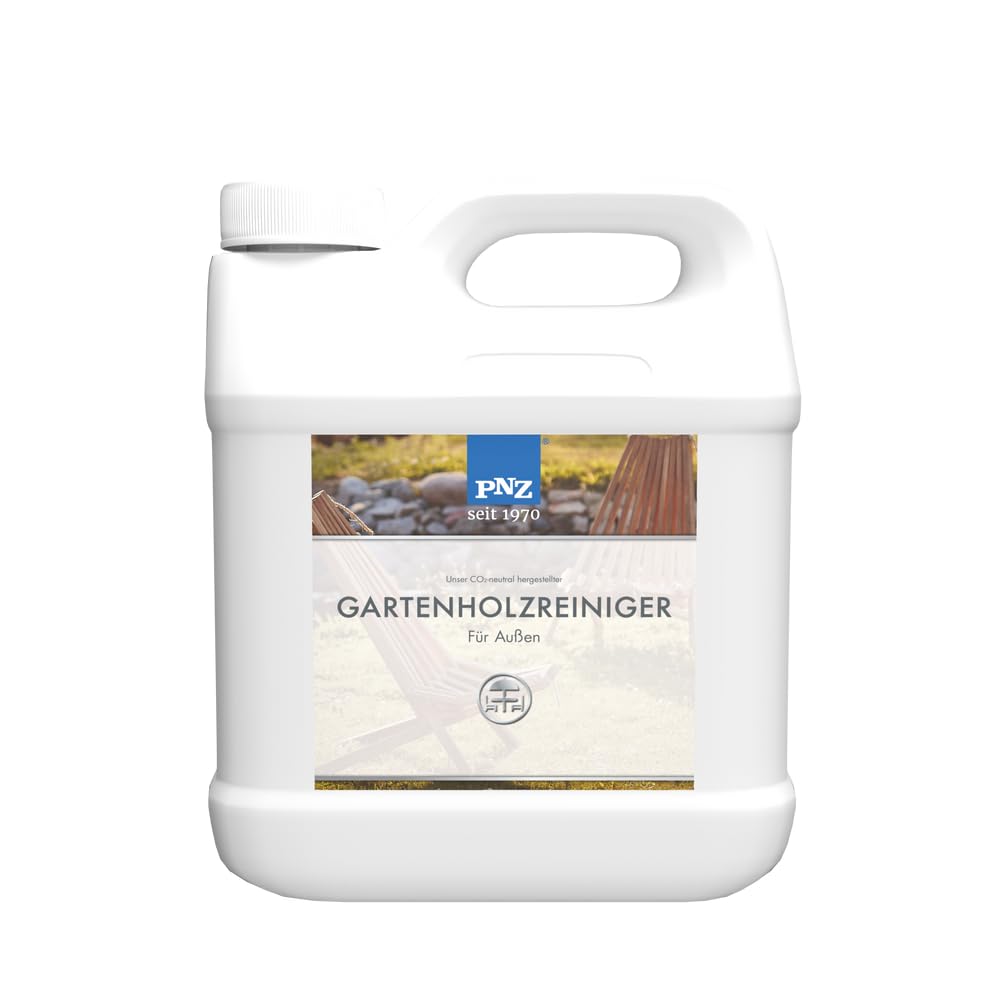
For outdoor wooden surfaces, PNZ garden wood cleaner can be used. It is suitable for garden wood and helps to remove dirt, algae, graying, as well as grease and oil residues.
When applying, it is recommended to proceed in sections:
- Remove loose dirt from the surface
- Prepare the wood according to the product instructions
- Apply the cleaner evenly
- Observe the specified dwell time
- Treat the surface with a suitable brush
- Rinse off loosened residues thoroughly with water
- Allow the wood to dry completely
Especially in summer heat, you should only work on an area that can be cleaned and rinsed in a controlled manner within the specified dwell time.
Grayed deck wood: Need for care or natural change?
Untreated or insufficiently pigmented wood changes its color under the influence of the sun and weather. Over time, a silver-gray patina develops. This visual change does not automatically mean that the wood is damaged.
Whether a care treatment is necessary therefore also depends on the desired appearance. If the natural graying is to be preserved, cleaning is the primary focus. If the original or a wood-typical color tone is to be refreshed, a pigmented deck oil can be used after cleaning.
Colorless oil does not protect against UV-related color changes in the same way as a pigmented product. The choice between colorless and colored treatment should therefore be made consciously.
Select deck oil to match the wood type
Deck oils differ, among other things, in their pigmentation and color matching. To ensure the treated surface looks as uniform as possible, the product should match the type of wood and the desired final result.
Deck oils for various types of wood
- G² Deck Oil Ipe/Teak for Ipe, Teak, and comparable dark hardwoods
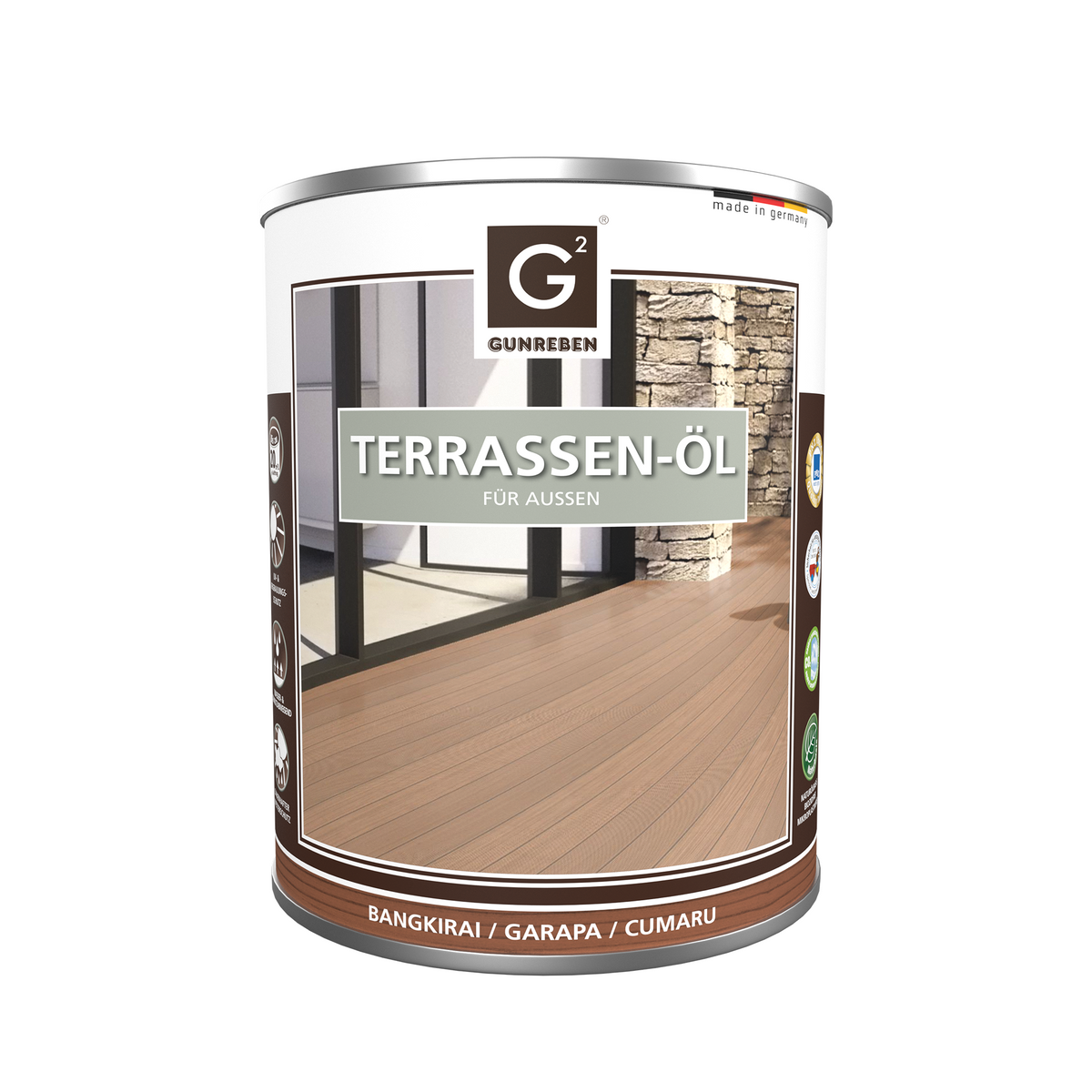
- G² Deck Oil Bangkirai/Cumaru/Garapa for tropical hardwoods such as Bangkirai, Cumaru, and Garapa
- G² Deck Oil Larch/Douglas Fir/Oak for decks made from these types of wood
- G² Deck Oil Colorless for surfaces where no specific color pigmentation is desired
Since wood color, pre-treatment, and weathering influence the result, the selected oil should first be tested in an inconspicuous area. A test coat shows how strongly the wood absorbs the color and whether the result meets your expectations.
Apply deck oil evenly and sparingly
A high application amount does not automatically lead to better protection. Too much oil can remain on the surface, cause sticky areas, or delay drying. What is crucial is a thin, even application on clean and dry wood.
For application, the following sequence is generally recommended:
- Clean the wood surface and allow it to dry completely
- Stir the container thoroughly before and during use
- Test the oil on a small sample area first
- Spread the product thinly in the direction of the wood grain
- Avoid overlaps and visible material excesses
- Remove excess oil according to the manufacturer's instructions
- Fully observe the specified drying time
Heavily heated boards can cause the oil to absorb faster or dry too quickly. This makes it easier for overlaps and color differences to occur. Under unfavorable conditions, the treatment should therefore be postponed to a cooler day.
Why plant pots and garden furniture should be moved regularly
Different conditions prevail under plant pots, furniture, and outdoor rugs than on exposed surfaces. While the open deck dries quickly in the sun, moisture can persist longer underneath. At the same time, UV radiation is shielded in these areas.
Over time, this can lead to visible differences:
- Dark moisture rings
- Dirt deposits at the contact points
- Varying degrees of graying
- Color differences between covered and open areas
Plant pots should ideally stand on suitable feet or saucers. Furniture and rugs should be moved occasionally or lifted after rain so that the surface underneath can dry and be cleaned.
WPC decks require different maintenance than wood
WPC boards are usually not treated with a classic wood or deck oil. Nevertheless, they are not completely maintenance-free. Especially in the summer, sunscreen, drinks, grill grease, dust, and plant remains can leave visible traces.
For WPC, Resysta, and polyrattan surfaces, PNZ WPC cleaner is available. The cleaning concentrate can be used diluted or undiluted depending on the dirt, according to the manufacturer's instructions.
The following also applies to WPC:
- Do not clean the surface in the strongest midday heat
- Do not allow the cleaner to dry on the surface
- Use only suitable brushes or cleaning pads
- Do not use wire or nail brushes
- Observe the care instructions from the respective board manufacturer
Especially for unknown surfaces or older boards, a test in an inconspicuous place is recommended.
Cleaners, oil, and accessories for deck maintenance
Which products are required depends on the material, the condition of the surface, and the desired result. A dirty wooden deck first requires a suitable cleaner. A subsequent oil treatment only makes sense when the wood is clean and completely dry. For WPC surfaces, on the other hand, an explicitly designated cleaner should be used.
The range at Profiholzpflege is structured according to the respective work steps:
- Deck care products for cleaning and preparation
- Deck oils for subsequent surface treatment
- Deck accessories for cleaning and product application
- Decks – Overview with cleaners, care products, oils, and accessories
Checklist for deck maintenance at high temperatures
- Check surface temperature before starting work
- Work in the morning, evening, or in the shade if possible
- Remove loose dirt dry first
- Apply cleaning agents only in sections
- Keep the cleaner moist during the dwell time
- Allow wood to dry completely before oiling
- Match deck oil to the type of wood and color effect
- Apply oil thinly and evenly
- Move plant pots, furniture, and rugs regularly
- Use only suitable care products for WPC
Frequently asked questions about deck maintenance in hot weather
FAQ
Can I oil my wooden deck in extreme heat?
Deck oil should not be applied to heavily heated boards or in direct midday sun. The cooler morning or evening hours are better suited. In persistent heat, it may make sense to postpone oil treatment to a more suitable time.
Why should deck oil not be applied in direct sun?
On a heavily heated substrate, the oil can set too quickly and be harder to spread evenly. As a result, the finish can become patchy or uneven. The temperature and application instructions of the respective product must therefore be observed.
How should a deck be cleaned in the summer?
Loose dirt such as dust, pollen, leaves, and flower debris should be removed regularly with a suitable broom. More heavily soiled areas can be treated with a suitable deck cleaner. The cleaner must not be allowed to dry on the surface during this process.
What requirements must be met before oiling a wooden deck?
The wood surface must be clean, completely dry, and not heavily heated. The deck oil is applied thinly and evenly in the direction of the grain. Excess oil should be removed according to the product specifications to avoid layer formation.
Why should plant pots, furniture, and outdoor rugs be moved regularly?
Covered areas dry differently than exposed boards. This can cause color differences, moisture stains, or dirt rings. Areas under plant pots, furniture, and rugs should therefore be checked regularly and cleared of accumulated dirt or standing moisture.
What should be considered for WPC deck boards during a heatwave?
WPC deck boards are generally not treated with a classic deck oil. However, they should be cleaned regularly of dust, sunscreen, grill grease, and plant residues. Use a cleaner suitable for WPC and observe the care instructions for the respective product.