


Cart
0

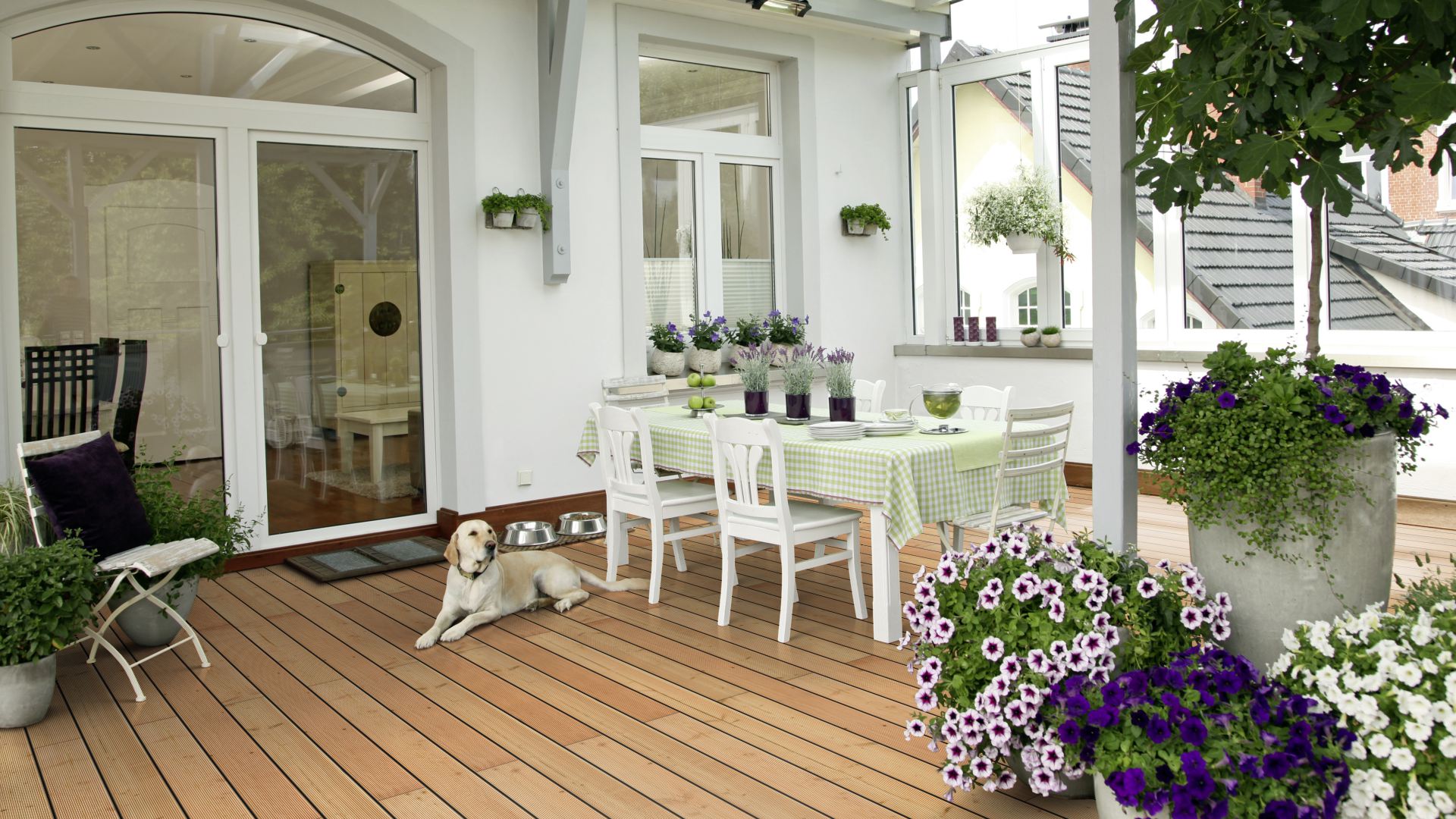
Anyone looking to select terrace wood often faces a fundamental decision: Douglas fir (softwood) or a dense hardwood (hardwood) for the terrace? There is no one-size-fits-all answer to this. Key factors include the desired aesthetic, ease of processing on site, the weight of the decking boards, surface wear and tear, and—if relevant—the available budget.
It is important to note: The collective term "hardwood" in deck construction usually refers to dense broad-leaved wood and does not denote a single wood species with uniform properties. Garapa, Ipé, Cumaru, and Bangkirai differ in terms of density, hardness, color effect, and processing, among other things. The comparison between Douglas fir and these hardwoods can therefore help with the initial material decision. Subsequently, one can further differentiate between the various broad-leaved species.
An overview of the available wood species and finishes can be found in our wood decking boards section.
A quick guide to decision-making
If you are wondering which wood is suitable for decking boards, you can narrow down your choice based on a few fundamental characteristics:
- Douglas fir is particularly worth considering if you are looking for a relatively lightweight softwood that is easy to work with. If price is an important selection criterion, the generally lower price level compared to the hardwoods considered here may also speak in favor of Douglas fir.
- Garapa, Ipé, Cumaru, and Bangkirai are dense hardwoods with a significantly higher bulk density than Douglas fir and are correspondingly heavier given the same dimensions and comparable wood moisture. The individual wood species also differ significantly in terms of color, hardness, and processing.
- The desired appearance can further narrow down the selection: Douglas fir features a pronounced softwood structure, while the hardwoods considered range from light-colored Garapa to the darker brown tones of Ipé.
- Processing effort and surface hardness should be considered together. The denser and harder woods place higher demands on cutting and fastening, but at the same time possess a noticeably harder surface than Douglas fir.
However, the wood species is only one part of the planning. The board profile, substructure, fastening, drainage, and ventilation must all be coordinated with one another.
Douglas fir terrace: Properties, pros and cons
Douglas fir is a softwood and is used for outdoor construction. It is available from both European and North American sources. A Douglas fir decking board should therefore not be categorized as "regional" or "German" solely based on the species of wood.
A warm, yellowish-reddish to brown color with clearly visible growth rings is typical. Depending on the grading and origin, the proportion of knots, growth ring structure, and color variation can vary. This creates a surface clearly defined by the natural wood structure.
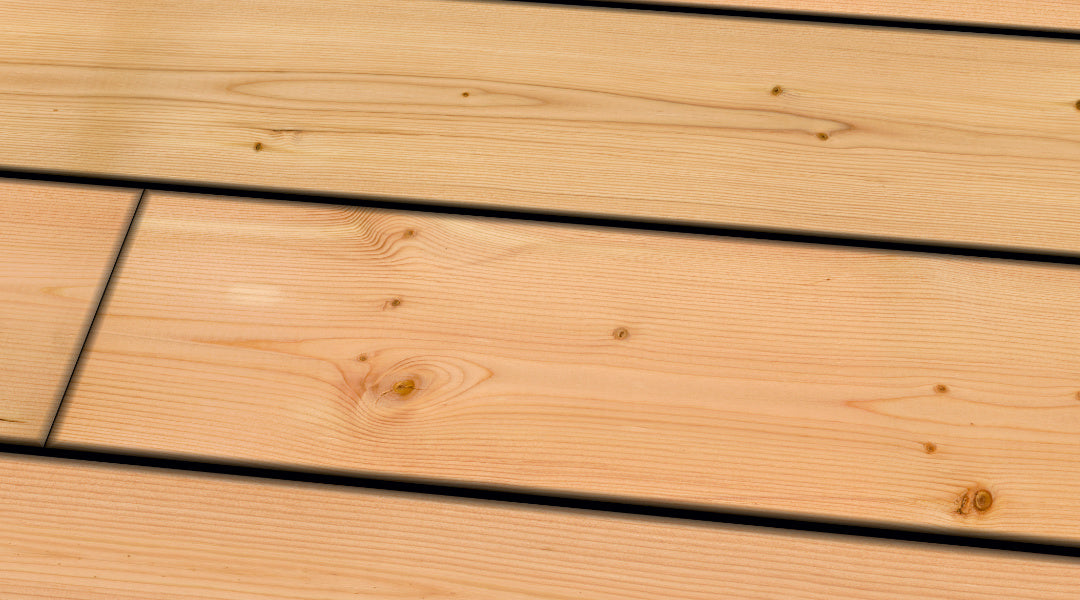
Due to its lower bulk density, Douglas fir can be sawn and drilled with less effort than hardwoods such as Garapa, Ipé, Cumaru, and Bangkirai. Knots and growth ring structure can influence processing. Pre-drilling can help prevent splitting, especially near the ends of boards and at screw points.
As a softwood, the surface is less hard than the mentioned hardwoods. Pressure marks, signs of wear, or minor mechanical damage may therefore be more visible. Whether this is relevant to your material selection depends on the intended use and desired aesthetic.
Available profiles and finishes can be found in our Douglas fir decking section.
What is meant by "hardwood" decking
Botanically, a distinction is made between softwood (like Douglas fir) and hardwood. In deck construction, the term "hardwood" is often used as a collective term for particularly dense, durable broad-leaved woods (usually from overseas). However, for concrete material selection, this classification is too general, as the individual hardwood species differ significantly from one another in some cases:
- Garapa: Usually shows a relatively light, yellowish to golden-brown color and has a dense, hard surface.
- Ipé: Is extremely dense and hard, with colors primarily in the medium- to dark-brown range.
- Cumaru: Also possesses very high density and hardness. The coloring can include yellowish, reddish-brown to darker areas and color streaks.
- Bangkirai: Comprises various species within a wood group in the trade. Typical colors are yellowish-brown to olive-brown; properties and appearance can vary within the group.
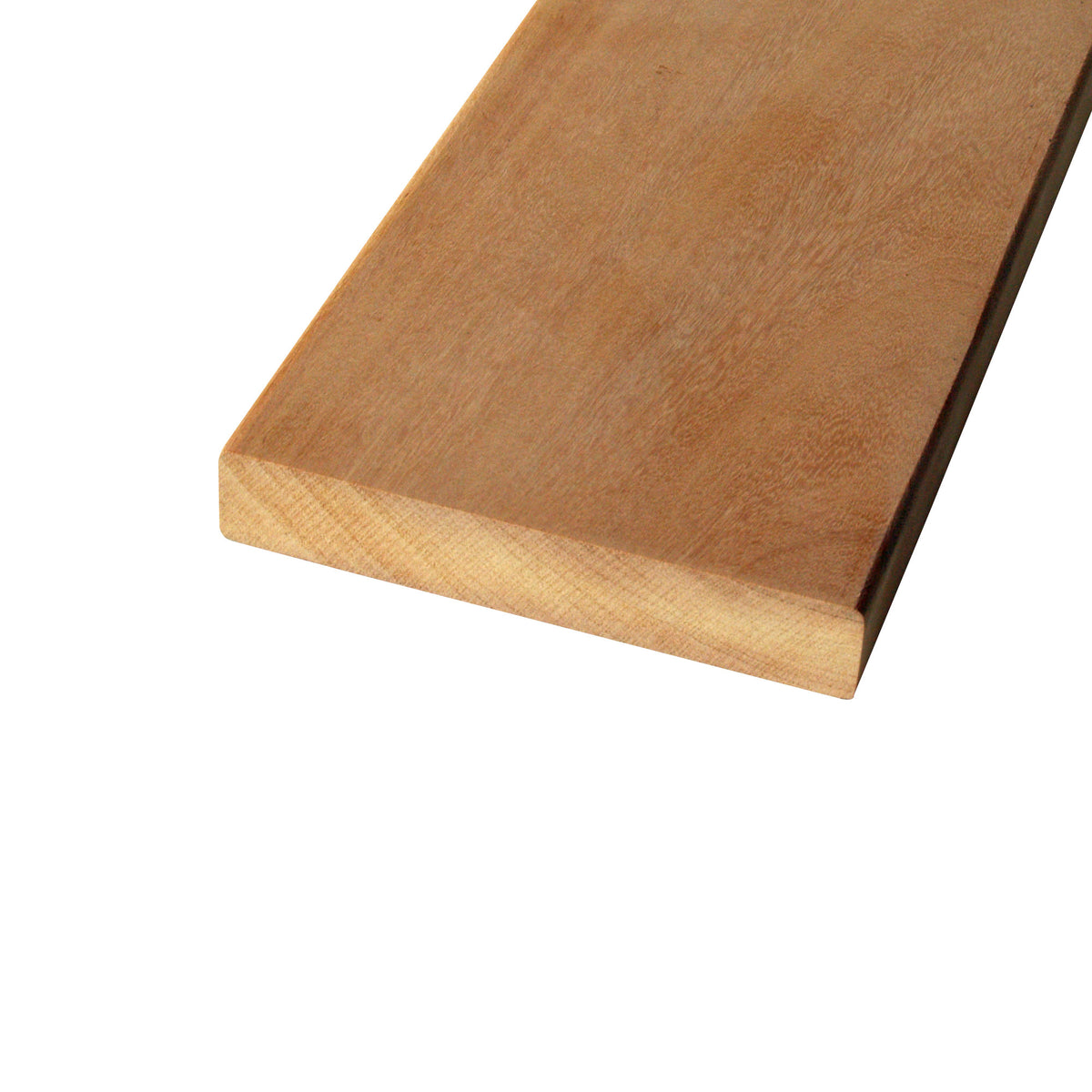
Therefore, the term "hardwood decking" alone does not indicate exactly which aesthetics, processing, or material properties to expect, either botanically or technically. If you would like to compare the individual species in more detail after making the fundamental decision to choose a heavy hardwood, you will find further information in our comparison of hardwood decking boards.
Comparing material properties
Workability
For construction sites with many cuts, connections, or special details, workability can be an important selection criterion. Due to its lower bulk density, Douglas fir (as a softwood) can be sawn and drilled with less tool effort than Garapa, Ipé, Cumaru, and Bangkirai.
The aforementioned hardwoods place more strain on tools due to their high density and hardness. Sharp blades, suitable drill bits, and careful preparation of screw connections are therefore particularly important. The actual processing effort differs between the individual wood species.
High hardness is not automatically a quality advantage: it can be a relevant material property for surfaces subject to higher mechanical stress, but at the same time, it increases the effort required for cutting and installation.
Weight and handling
Douglas fir has a lower bulk density than Garapa, Ipé, Cumaru, and Bangkirai and is correspondingly lighter with the same dimensions and comparable wood moisture. This is noticeable during transport, trimming, and installation.
For balconies, roof terraces, or other structures where the dead weight of the entire setup is relevant, the structural situation must be assessed professionally, regardless of the wood species.
Appearance and surface
Douglas fir displays clearly pronounced growth rings and—depending on the grading—visible knots. This makes the structure typical of softwood clearly recognizable.
The visual spectrum is broader for the hardwoods considered. Garapa, for example, allows for a light, warm surface effect, while Ipé usually appears much darker. Cumaru can show yellowish, reddish-brown to darker areas and color streaks. Bangkirai often falls within the yellowish- to medium-brown range.
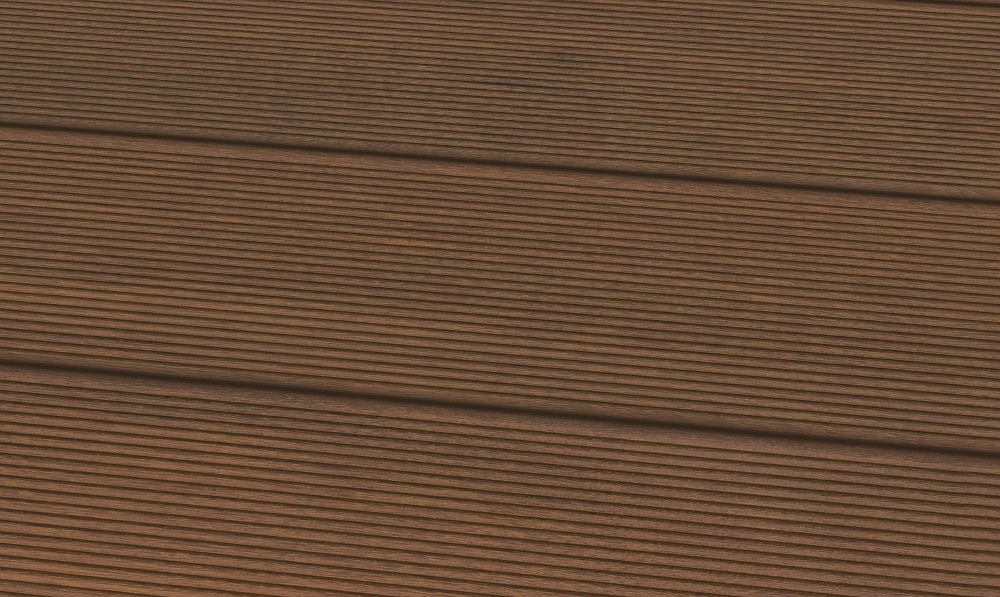
Surface hardness also varies. Douglas fir is noticeably softer than Garapa, Ipé, Cumaru, and Bangkirai. When selecting, one should therefore not just distinguish generally between "softwood" and "hardwood," but also take into account the desired appearance and level of usage.
Weathering and color change
Untreated wood surfaces change outdoors under the influence of UV radiation and weather. The original colors fade over time, and the surface develops a gray to silver-gray patina.
This graying is not a quality defect, but a typical visual change in weathered wood surfaces. How quickly and evenly it occurs depends on orientation, roofing, and weathering intensity, among other factors. Partially covered areas may therefore gray differently.
In addition, wood-typical changes such as fine surface cracks can occur in outdoor wood. Furthermore, wood ingredients can be washed out in some hardwood species. For adjacent light-colored building components, drainage should therefore be considered during the planning phase.
Care
Regardless of the wood species, dirt, leaves, and long-lasting moisture accumulation should be regularly removed from the terrace. Crucially, the construction must allow rainwater to drain and the wood to dry out again.
Whether a surface is additionally oiled depends primarily on the desired appearance. If the original wood color is to remain visible for longer, a terrace oil suitable for the specific wood species can be used. Without such treatment, the typical graying will develop with weathering.
Even a terrace that is graying untreated should be cleaned and inspected regularly.
Material costs
Douglas fir is usually priced lower than the hardwoods considered here. However, the price level can vary depending on dimension, profile, grading, origin, availability, and the general market situation.
There is also no uniform price level among the hardwoods. Garapa, Ipé, Cumaru, and Bangkirai can differ from one another in price. If material price is an important selection criterion, the available versions should be compared accordingly.
Profiles and fastening
In addition to the wood species, the profile influences the effect and processing of a decking board. Smooth, grooved, or differently profiled surfaces differ visually, as well as in cleaning and refinishing. Side grooves may be part of a planned hidden fastening system.
The choice of profile should therefore be considered in conjunction with the fastening method. Not every fastening system is suitable for every board.
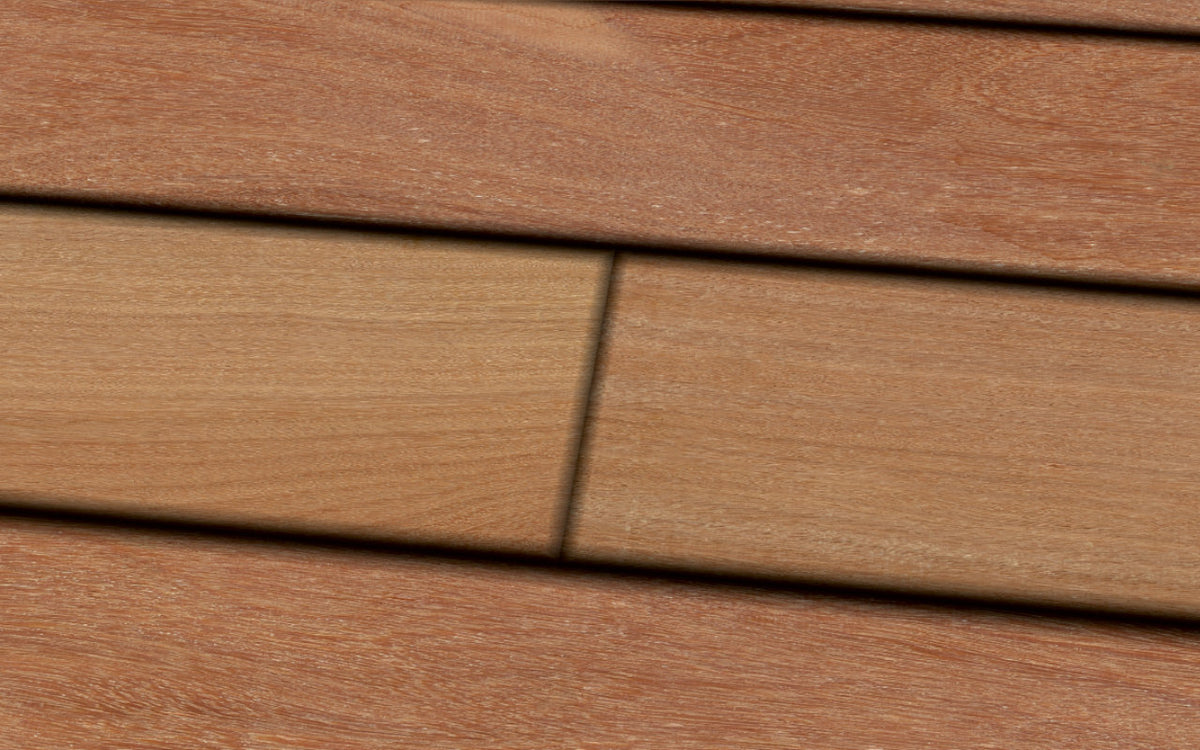
The substructure is equally important. Material, spacing, and fastening must match the selected decking board and the installation method. You can learn more about this in the article Choosing a substructure for decking.
Overview: Douglas fir vs. hardwood
| Criterion | Douglas fir (softwood) | Hardwoods like Garapa, Ipé, Cumaru, or Bangkirai |
|---|---|---|
| Processing | Easier to saw and drill due to lower bulk density; pre-drilling recommended at board ends | More demanding to process due to higher density and hardness; suitable tools and careful pre-drilling are especially important |
| Weight | Lighter given the same dimensions and comparable wood moisture | Heavier due to higher bulk density given the same dimensions and comparable wood moisture |
| Appearance | Yellowish-reddish to brown, clearly visible growth rings; knot pattern depends on grading | Wide spectrum from light Garapa to darker Ipé; Cumaru and Bangkirai each have their own color and structural effect |
| Surface | Less hard (softwood); pressure marks and signs of wear may be more visible | Very hard surfaces; specific properties differ between wood species |
| Weathering | Color change and graying when weathered without treatment; wood-typical surface changes possible | Also grays when weathered; different color changes and partial washout of ingredients depending on the wood species |
| Price level | Usually lower than the hardwoods considered here; depends on version and market situation | Varies depending on wood species, version, availability, and market situation |
| Selection | Various origins, gradings, and profiles available | Choice between different wood species with varying colors, densities, and properties |
Have you already made your fundamental decision? Then you can view the available Douglas fir decking boards directly or compare various wood species and finishes via the wood decking boards overview. If a dense hardwood is an option, the hardwood comparison will help with further selection.
Which wood species fits which project?
For the decision between Douglas fir or a heavy hardwood for the terrace, one should consider which properties are at the forefront for the respective application.
- If a relatively lightweight terrace wood is required, Douglas fir may be of interest. The lower weight is particularly noticeable during transport, handling, and processing.
- For many cuts or complex connections, the easier workability of Douglas fir can also be a selection criterion. However, its lower surface hardness should be taken into account for areas subject to higher mechanical stress.
- If material price is an important selection criterion, Douglas fir may also be suitable, as its price level is usually below that of the hardwoods considered here. The decisive factors are the available versions and the current market situation.
- For a light hardwood look, Garapa could be a suitable direction. Its yellowish to golden-brown color effect differs significantly from many darker hardwoods.
- For a darker hardwood surface, Ipé may be interesting. Its higher weight and more demanding processing should be considered during planning.
- Anyone looking for a very dense hardwood board with a warm and variable color effect can include Cumaru in their selection. Its high hardness requires appropriately prepared processing.
- Bangkirai is an option if a yellowish- to brownish hardwood look is desired. Since various species are grouped under this trade name, the specific product properties and respective grading should be taken into account.
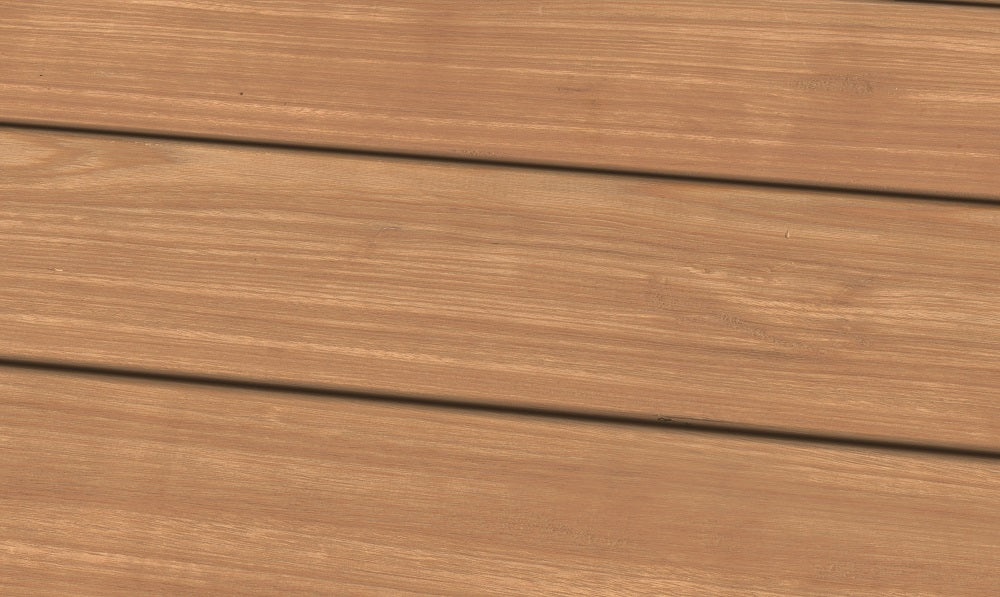
For balcony and roof terraces, the dead weight of the construction can also be relevant. For ground-level terraces, factors such as processing, budget, aesthetics, and structural details may take precedence.
Regardless of the wood species, the same applies: base, substructure, joints, fastening, ventilation, and drainage should be matched to the selected decking board and the respective installation.
Conclusion
Whether Douglas fir or a heavy hardwood is the more suitable choice for your patio does not depend on a generalized ranking of the materials. As a softwood, Douglas fir has a lower bulk density, is lighter, and is easier to work with than Garapa, Ipe, Cumaru, and Bangkirai, requiring less intensive tooling. It is also usually at a lower price point. Its lower surface hardness and pronounced softwood grain should also be taken into account when making your selection.
With hardwoods, further differentiation is required. Garapa, Ipe, Cumaru, and Bangkirai differ in color, density, weight, and processing. Anyone who has decided in principle on a dense hardwood should therefore compare the specific wood species in the next step.
Graying is also not a suitable criterion for generally rating one material group higher than another: both Douglas fir and hardwoods change their color when exposed to the elements. Those who wish to maintain the original color effect for longer can adjust their surface care accordingly. Otherwise, the gray to silver-gray patina typical of weathered wood will develop over time.
For your selection, you should therefore first clarify which requirements are paramount in terms of weight, appearance, processing, surface hardness, maintenance, and—if relevant—budget. You can then select the appropriate wooden patio decking by wood species and design.
