


Cart
0

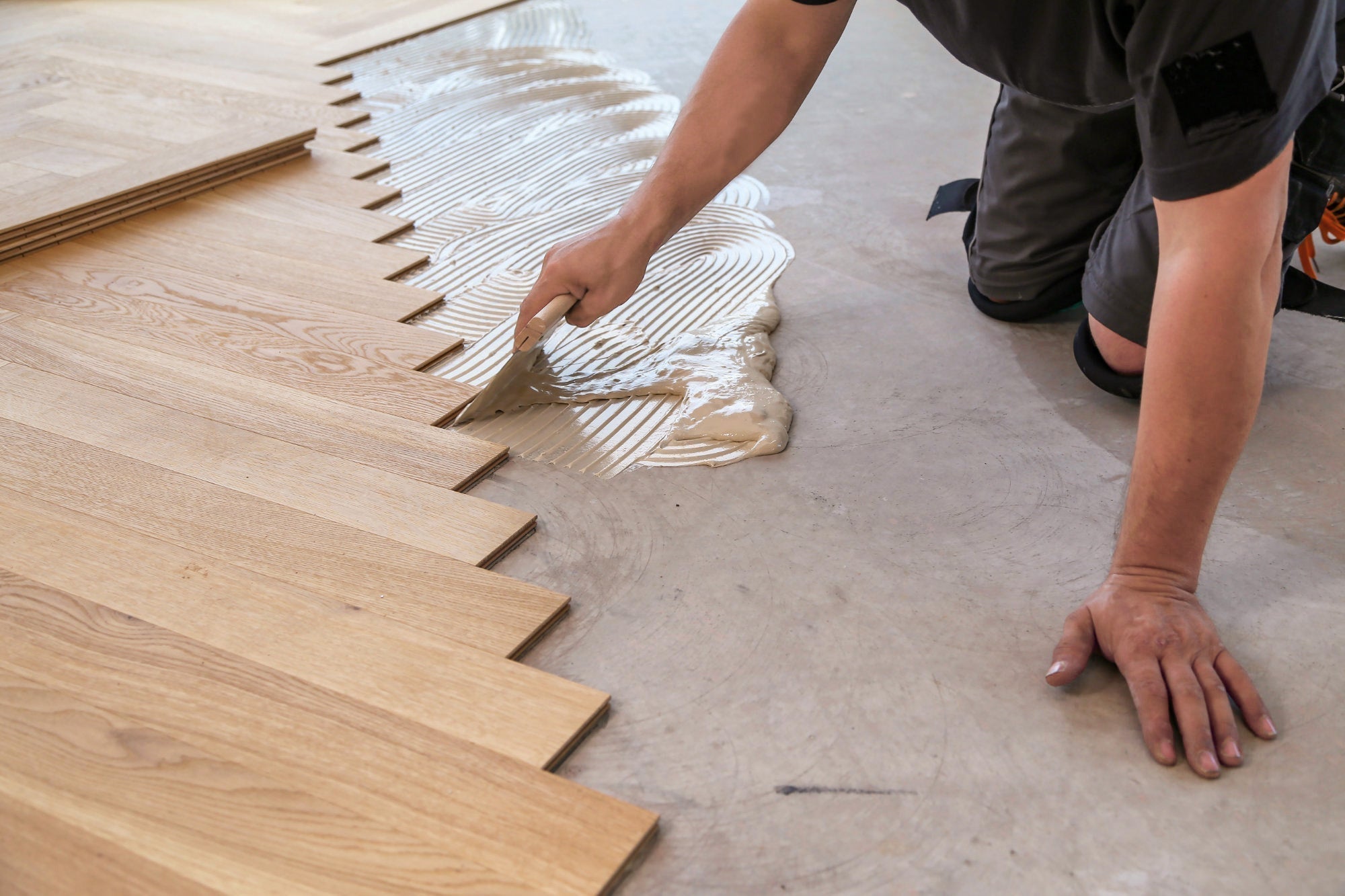
Choosing a high-quality real wood floor is a decision for decades. But beyond the wood species and grade, the installation method is crucial for the subsequent living experience: Should the parquet be installed as a floating floor or glued down over the entire surface?
This decision influences the room acoustics, the feel underfoot, and, above all, the efficiency of your underfloor heating. In this guide, you will find out whether you should glue your parquet or install it as a floating floor, and which method is right for your project at Gunreben.
What does floating installation mean?
Floating installation means that the floor lies loosely on the subfloor. The planks are simply connected to each other via a click system or tongue-and-groove gluing. This method is primarily common for engineered parquet or vinyl.
A suitable underlay is mandatory between the subfloor and the flooring to provide impact sound insulation and act as a vapor barrier.
Installing parquet as a floating floor: Pros & Cons
- Pros: Fast installation, no adhesive costs, walkable immediately, and easily removable when moving out, for example from a rented property.
- Cons: Floating parquet has a slightly "springy" feel when walking, can have worse acoustics with higher impact and walking noise without the appropriate underlay, and has a higher thermal resistance with underfloor heating.
Full-surface bonding: The professional standard
With bonding, the flooring is connected directly to the screed. This is the common installation method for solid wood planks as well as strip parquet, as it offers many advantages.
Advantages of bonding
- Excellent acoustics: Since there is no hollow space between the floor and the subfloor, the walking sound is quiet and solid.
- Efficiency with underfloor heating: Heat is conducted directly into the wood without an insulating layer of air.
- High durability: Fully bonded parquet is firmly connected to the subfloor. This can also be an advantage when sanding later.
Note: For the best possible result, a high-quality parquet adhesive and a professional subfloor inspection (CM measurement) are essential.
Gluing parquet onto tiles or installing it as a floating floor? Why we advise against it
In renovation forums, it is often claimed that you can easily glue parquet directly onto an old tile floor or install it as a floating floor. From our professional perspective, however, this approach carries significant risks for the longevity of the wooden floor, which is why we explicitly advise against it in the specialist trade.
- The problem of floating installation: Solid parquet naturally expands and contracts significantly with humidity fluctuations. A floating installation is technically unacceptable here. Even with multi-layer parquet, floating installation on tiles often leads to unsightly creaking noises and poor room acoustics.
- Lack of adhesion when bonding: Tiles generally have a high-density, usually glazed surface. A simple sanding is not enough. Without time-consuming and costly diamond grinding, special adhesion primers, and full-surface leveling compound, the parquet adhesive will not form a permanent bond.
- Unpredictable moisture: Tiles act as a vapor barrier. Any residual moisture in the subfloor, or moisture that rises later, cannot escape and moves directly into the wood. This inevitably leads to swelling, cupping, and, in the worst case, total loss of the parquet.
In practice, it is therefore recommended to first create a flawless, level surface with a suitable leveling compound in case of unevenness to ensure the longevity of the solid parquet.
Parquet with underfloor heating: floating or glued?
If you use underfloor heating, full-surface bonding is the clear recommendation. Glued wood releases heat into the room much faster than floating parquet. This saves energy costs in the long term and protects the material through even heat distribution.
Checklist: What is the right choice for you?
| Requirement | Recommendation |
|---|---|
| Rented apartment (temporary) | Floating installation |
| Property / New build | Full-surface bonding |
| Underfloor heating | Full-surface bonding |
| Solid wood planks | Full-surface bonding / screwing |
Conclusion: Glue parquet or install as floating?
Installing parquet as a floating floor is the fast, cost-efficient solution for DIY enthusiasts. However, anyone who wants comfort, good acoustics, and efficient use of their heating should have their parquet glued. This is a sensible method, especially when investing in long-lasting solid wood floors.
Discover our selection of solid parquet and engineered parquet now, or find the right accessories in our skirting board category.
